 Romain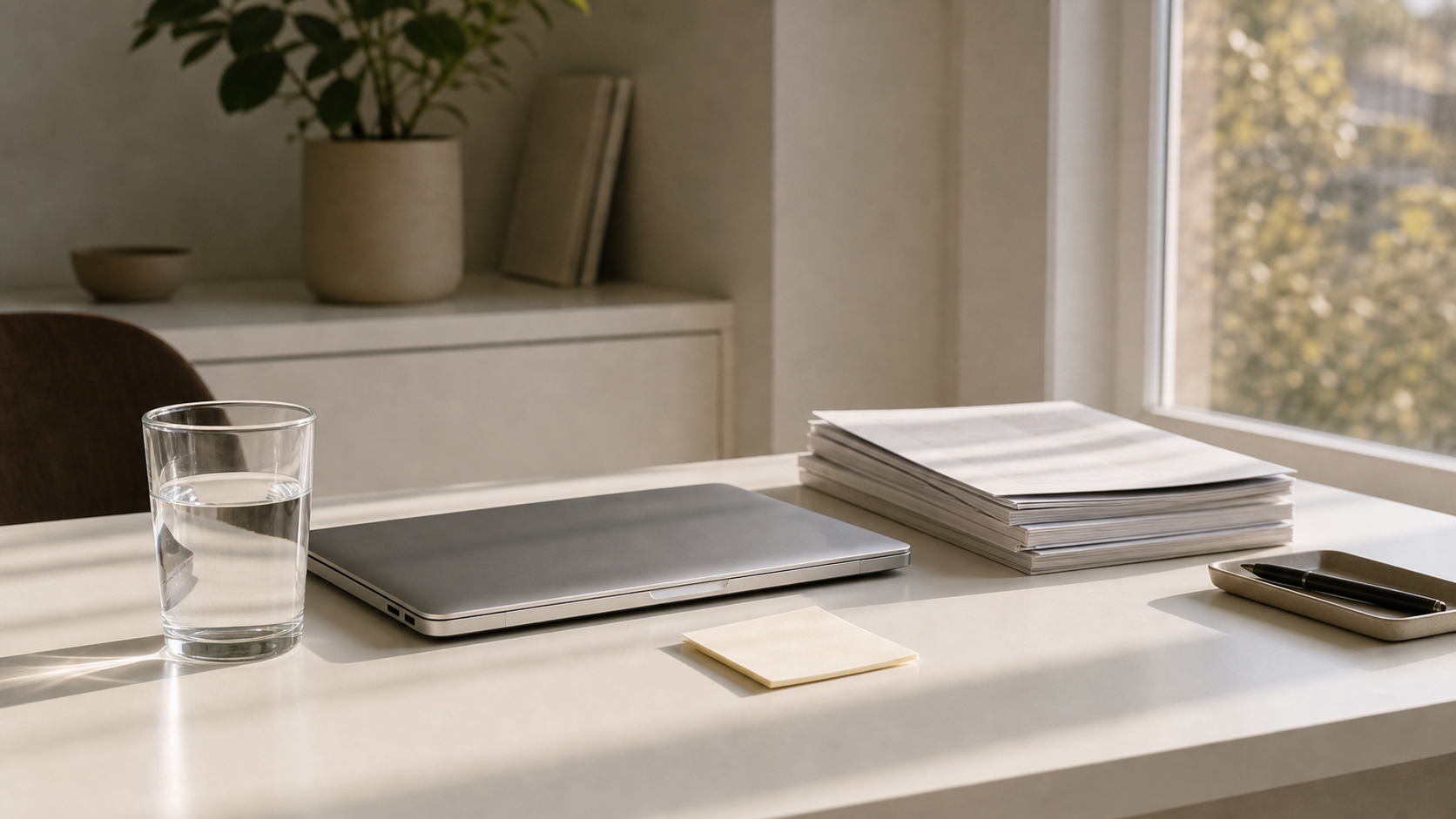
Returning to one clear next step is not a slogan for me; it is a practical way to check whether my days still feel like they belong to a person. When I write about how i handle overload and get my focus back, I am usually trying to understand the small choices that make a normal life feel clearer.
I try to treat attention as something living, not as a machine that can be forced into perfect output. The day becomes easier when I notice what keeps asking for me and what actually deserves a response.
A routine works best for me when it feels like a path, not a fence. I want enough shape to begin without bargaining, and enough openness to adjust when real life changes the weather.
What I keep noticing
I keep noticing that change rarely arrives as one grand decision. It arrives through repeated tiny permissions: to pause before answering, to leave a margin in the calendar, to take a walk without turning it into a productivity tool, to let a quiet morning remain quiet.
Quiet time is not empty time. It gives the mind a place to sort the small signals that get flattened when every hour is filled with motion, alerts, and unfinished decisions.
A simple practice
The practice I return to is simple: name the real pressure, remove one unnecessary input, and choose the next action that would make the room feel a little more breathable. It sounds small because it is small, and that is exactly why it works.
Home has become less about having everything arranged and more about returning to a pace I can recognize. A clear table, a short walk, or a page of notes can change the feeling of a whole evening.
Life becomes easier to read when I stop treating every moment as something to optimize.
Work feels better when I protect the first honest hour of focus. Before the tabs multiply, before messages reshape the plan, I try to give one important thing enough room to become visible.
Rest is not always dramatic. Sometimes it is a glass of water, a closed laptop, and the decision to stop improving the day long enough to actually inhabit it.